


Most people picture a roof replacement as one loud, dusty day. A truck pulls up, old shingles rain into a dumpster, and by dinner the house has a fresh top. That day does happen, but it is the shortest part of the story. The decisions that determine whether a roof lasts fifteen years or thirty are made weeks earlier, at the kitchen table and in the attic.
Niskayuna makes those decisions a little more interesting than average. Much of the town’s housing went up in the decades after World War II, so plenty of roofs sit on colonials, capes and split levels that have already been reroofed once or twice. Mature oaks and maples shade a lot of lots. Winters along the Mohawk bring heavy snow, deep cold and long stretches of freeze and thaw. All of that shapes what a good installation looks like here.
Crews that take on a residential roof installation in Niskayuna typically come from around the Capital Region, and Revere Roofing out of Duanesburg is one familiar name among them. It has worked on homes and businesses across Schenectady County and its neighbors for over 35 years, holds Owens Corning Preferred and CertainTeed Select ShingleMaster standing, and installs everything from architectural shingles to standing seam metal, slate and cedar shakes, with every part of the job explained and priced before work begins.
The Attic Tells the Truth First
A careful estimate starts indoors. Someone should go into the attic with a flashlight and look at the underside of the roof deck. Dark staining around nails, soft spots in the plywood or old plank boards, and frost on the sheathing in winter all say something about moisture and ventilation that the shingles alone cannot.
The number of existing layers matters too. New York’s building code generally limits a roof to two layers of asphalt, and many older homes already have that. Even where a second layer is allowed, a full tear-off is usually the better choice in this climate because it exposes the deck, lets the crew replace rotted boards and allows a proper ice barrier to go down at the eaves. Layering over an old roof hides problems and adds weight to framing that was never designed for it.
Ventilation is the last piece of the pre-work puzzle. A balanced system pulls cool air in at the soffits and lets warm, moist air out at the ridge. When that airflow is blocked, the attic heats up, snow melts unevenly and ice dams form at the edges. A new roof is the cheapest moment to correct it.
Paperwork That Protects the Homeowner
Reroofing in Niskayuna generally requires a building permit, and the details are spelled out in the town’s building construction code. The permit is not just a formality. It means an inspector looks at the work, including a final inspection after the job is complete, and it creates a record that buyers and insurers may ask about years later.
A reputable contractor pulls the permit in their own name and supplies proof of liability insurance and New York workers’ compensation coverage. If a roofer suggests skipping the permit to save time or money, that is worth treating as a warning. Unpermitted work can complicate insurance claims and home sales down the road.
Deciding What Goes on Top
Material choice depends on budget, the style of the house and how long the owners plan to stay. In Niskayuna, a few options come up again and again.
Architectural asphalt shingles remain the most common choice. They are dimensional, reasonably priced and widely warrantied. Under heavy tree cover, shingles with algae resistance help prevent the black streaking that shaded roofs develop.
Standing seam metal costs more upfront but sheds snow readily and can last for decades. It suits contemporary homes and outbuildings, and many owners now choose it for its long service life.
Synthetic slate gives a colonial or Tudor the look of natural stone at a fraction of the weight, which matters on framing that was built for asphalt.
Natural slate and cedar shake still have a place on historic or high-end homes, though they demand specialized installers and more maintenance planning.
Whatever the surface, the hidden components deserve equal attention. Drip edge, underlayment, flashing and ventilation products should come from the same system when possible, since manufacturers often tie their stronger warranties to complete systems rather than shingles alone.
Install Day Seen From the Driveway
When the work day finally arrives, a well-run job tends to follow a predictable rhythm.
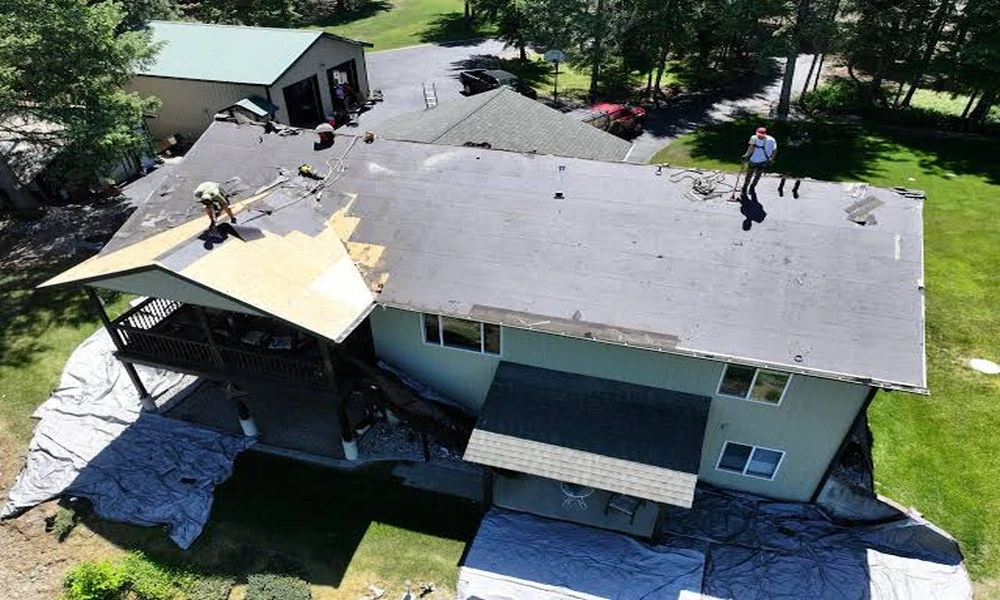
- The crew protects shrubs, siding, windows and the driveway with tarps and plywood before anything comes off the roof.
- Old shingles, underlayment and flashing are stripped down to the deck and dropped into a dumpster or trailer.
- The deck is inspected board by board, and damaged sheathing is replaced.
- Drip edge goes on along the eaves, followed by an ice and water barrier at the eaves, valleys and around penetrations.
- Synthetic underlayment covers the remaining deck.
- New flashing is installed at chimneys, sidewalls and vents rather than reusing tired metal.
- Shingles or panels are installed according to the manufacturer’s specifications, finishing with ridge vent and ridge caps.
- The yard is swept with magnets for stray nails, and debris is hauled away.
Most single-family homes take one to three days depending on size, pitch and how much deck repair turns up. Steep roofs and complicated layouts with dormers and valleys run longer.
Letting the Calendar Help
Weather affects quality more than many homeowners realize. Asphalt shingles rely on the sun’s warmth to activate their sealant strips, so installs between late spring and early fall usually bond best. Cold-weather roofing is possible, and sometimes necessary after storm damage, but it calls for hand sealing and extra care. Booking a project during the winter for a spring start often gives more scheduling flexibility, since contractors fill up quickly once the snow melts.
Reading the Fine Print Before It Matters
Two kinds of warranties come with a new roof. The manufacturer covers the materials, while the installer covers workmanship. Certified installers can often register enhanced manufacturer warranties that extend coverage to labor and to the full roofing system, but only when every component and installation step meets the program’s rules. Homeowners should ask for written copies of both warranties, confirm registration with the manufacturer, and keep the paperwork with the permit and final inspection records.
A new roof is easy to judge on the day the dumpster leaves. Its real quality shows up during the first hard winter, when snow sits for weeks, temperatures swing and the eaves either stay dry or they do not. The homeowners who end up happiest are the ones who treated the weeks before installation as seriously as the installation itself, asking about the attic, the permit, the materials and the warranty long before anyone climbed a ladder.