


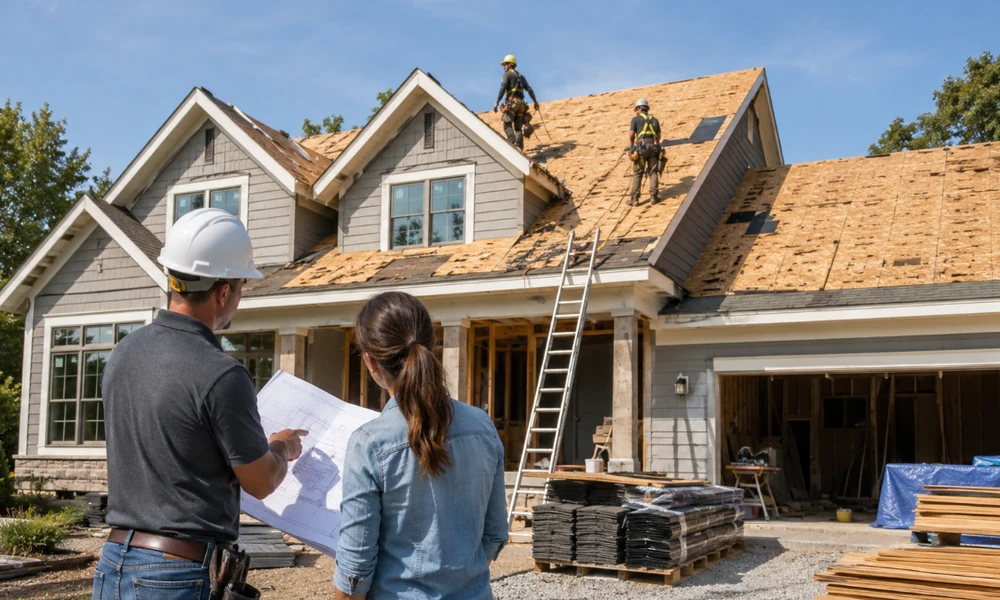
A major home renovation involves many moving parts. Walls may come down, rooms may expand, and electrical or plumbing systems may change. If a new roof is also part of the project, it needs to be planned carefully. The roof protects nearly everything being renovated underneath it.
Installing the roof at the wrong time could expose new materials to rain or require completed work to be changed. Before construction begins, use this roof installation checklist to keep the project organized.
Review the Full Renovation Plan
Start by looking at how the renovation will affect the shape of the house. A room addition, second story, porch, chimney, or new skylight may change the roof design.
The roof plan should match the final structure, not the house as it appears before work begins. Confirm the rooflines, slopes, drainage areas, and connection points. Changes made after materials arrive can cause delays and extra expenses.
Inspect the Existing Roof Structure
An older roof may hide damaged decking, weak supports, moisture, or wood rot. These problems are not always visible from the ground.
Arrange for the roof structure to be inspected before setting the final budget. If the renovation adds weight or changes the building layout, additional framing may be necessary. It is usually easier to correct structural concerns while the home is already under construction.
Confirm Permits and Building Requirements
Roof installation often requires permits and inspections. Local rules may cover materials, fastening patterns, ventilation, underlayment, and resistance to wind or snow.
Find out who will obtain the permits and schedule inspections. Do not assume someone else has handled it. Missing paperwork can stop construction and may create problems when the house is sold.
Choose the Roofing Material Early
Common choices include asphalt shingles, metal, tile, slate, and different flat-roof systems. Each material has its own cost, weight, appearance, and installation requirements.
Think about more than color. Consider the local climate, the roof slope, expected maintenance, and how long you plan to own the home. Heavy materials may require stronger framing. Some specialty products may also take several weeks to arrive.
Order materials early enough to avoid delaying the larger renovation.
Plan Ventilation and Insulation Together
Roof ventilation and attic insulation should work as one system. Poor planning may trap heat and moisture inside the attic. Over time, this can affect comfort, energy use, and the condition of the roof deck.
If the renovation changes the attic or ceiling design, discuss ventilation before the roof is installed. Vaulted ceilings, finished attic rooms, and spray foam insulation can require a different approach than a traditional open attic.
Check Flashing and Drainage Areas
Flashing helps prevent water from entering around chimneys, skylights, walls, valleys, and roof openings. These areas deserve close attention because small mistakes may lead to serious leaks.
The plan should also show where water will travel. Check the locations of gutters and downspouts. Make sure runoff will be directed away from doors, walkways, foundations, and newly landscaped areas.
Coordinate the Construction Schedule
Roof work should be coordinated with framing, masonry, siding, electrical work, and heating or cooling installations. For example, installing shingles before new vents are placed may lead to sections being removed and installed again.
Ask for a written schedule showing when the roof will be dried in and when the finished material will be installed. Weather delays should also be included in the planning.
Prepare the Property
Roof installation can create noise, vibration, dust, and falling debris. Move vehicles, outdoor furniture, decorations, and fragile items away from the work area. Protect plants and mark sprinkler heads or hidden outdoor equipment.
Inside the home, remove delicate objects from shelves and walls. Keep children and pets away from active construction zones.
Review the Finished Roof
Before considering the job complete, inspect the roof from the ground and review the final details. Confirm that flashing, vents, gutters, and visible edges appear secure. Ask about cleanup, inspection results, product information, and warranty documents.
A roof installation is a major part of a renovation, but careful planning can make it much easier. When the roof design, materials, schedule, and other construction work are coordinated early, homeowners are less likely to face avoidable delays or surprise expenses.
This post was written by a professional at Baypoint Roofing. Baypoint Roofing is a State-certified, insured, bonded, and licensed roofing contractor specializing in insurance restoration, storm damage repair, and expert roof inspections and roof installation Port St Lucie FL. With over 25 years of experience, we proudly serve the entire state of Florida. Whether you need a complete roof replacement or precise repairs, our skilled team delivers unmatched quality and service. Trust Baypoint Roofing to protect your home or business with solutions that endure the Florida elements and exceed your expectations. Your satisfaction is our top priority.