
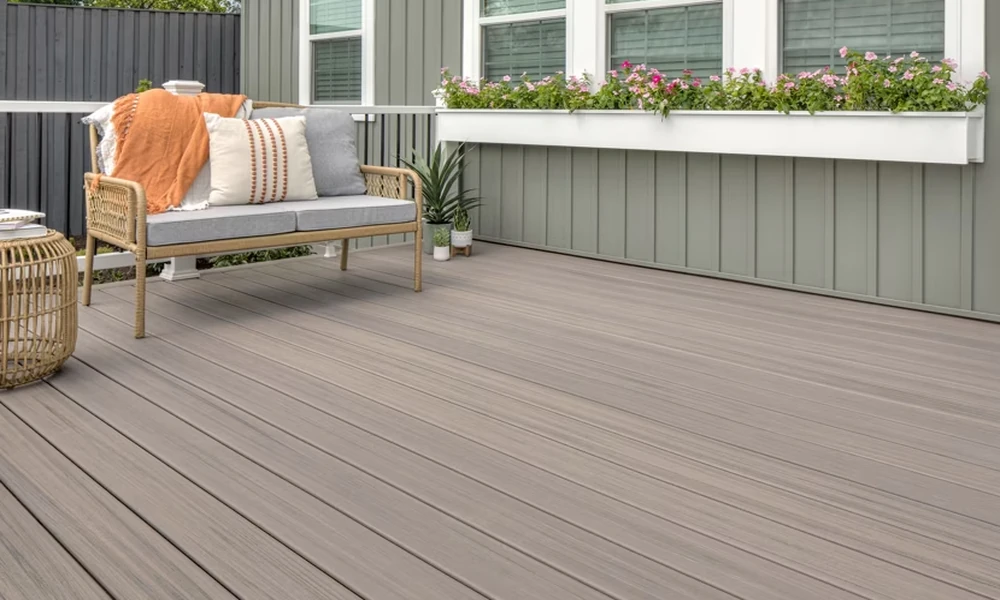
A deck gives you a place to enjoy your morning coffee, share a meal, or spend more time outside. Before choosing furniture or planning the layout, though, you need to decide what goes under your feet.
Comparing wood vs. composite decking comes down to more than appearance. Your budget, local weather, and willingness to handle upkeep all matter.
Both materials can create an inviting outdoor space. The better choice is the one that fits how you plan to use and care for your deck.
What Is Wood Decking?
Wood decking uses real lumber, such as pressure-treated wood, cedar, or redwood. Each has different qualities, costs, and care needs.
Pressure-treated lumber is often a budget-friendly option. Cedar and redwood appeal to homeowners who prefer their natural grain and color, although prices vary by grade and location.
One of wood’s biggest strengths is its character. Boards have natural differences in grain and tone, so the finished deck has a less uniform appearance.
Wood also gives you options later. Depending on its condition and previous finish, you may be able to sand, stain, or refinish the surface.
The tradeoff is ongoing care. Wood can develop cracks, splinters, and decay, particularly where moisture remains trapped. Proper installation, drainage, and regular checks matter just as much as the finish.
What Is Composite Decking?
Composite decking typically combines wood fibers with plastic. Many products have a protective outer cap designed to improve resistance to staining, fading, and moisture.
It comes in a range of colors and grain patterns, from light natural tones to darker finishes. Unlike most finished wood decks, modern capped composite generally does not need routine staining or sealing.
That makes it appealing if you want to spend less time refinishing the surface.
Composite still needs cleaning, though. Leaves, dirt, food spills, and other buildup should not be left sitting on the boards. Follow the product’s care guide, since cleaning methods vary.
Also, composite and PVC decking are different materials. PVC decking does not contain wood fibers, so check what you are comparing when reviewing samples and quotes.
Which Material Needs More Maintenance?
Wood usually needs more hands-on care, especially if you want to preserve its original color or maintain a stained finish.
A wood deck may need:
- Regular cleaning and debris removal.
- Checks for splinters, loose fasteners, and damaged boards.
- Stain or water-repellent finish reapplied as needed.
- Repairs where moisture or wear has caused damage.
There is no single refinishing schedule for every deck. The wood species, finish, sunlight, and weather exposure all affect how often work is needed.
Some woods, including cedar, can be left unfinished to weather naturally. That does not remove the need for cleaning, drainage, and inspections.
Composite usually avoids the repeated staining and sealing work. Its routine care focuses on cleaning spills, removing debris, and keeping drainage gaps clear.
Low maintenance still means some maintenance. Surface buildup can support mold or algae, and either material can become slippery when dirty or wet.
Which Decking Looks Better?
This is largely a matter of taste.
Wood suits homeowners who enjoy natural grain, variation, and the way lumber changes over time. You can maintain a stained appearance or, with suitable wood, allow it to develop a weathered look.
Composite offers more predictable color and texture across the deck. Some boards have strong color variation and detailed grain patterns, while others look more uniform.
View samples outside before deciding. A color that looks warm in a showroom may look quite different in full sun beside your house.
Think about future changes, too. Wood can often be refinished. With capped composite, you generally choose the color for the long term rather than planning to sand or stain it later.
Is Wood Decking Cheaper Than Composite?
Pressure-treated wood often costs less upfront than composite. However, cedar, redwood, and premium hardwoods may narrow or reverse that difference.
Compare complete installed quotes rather than board prices alone. Your project may also include:
- Framing and supports.
- Railings and stairs.
- Fasteners and trim.
- Removal of an existing deck.
- Labor and site preparation.
For long-term costs, consider cleaning, refinishing, repairs, and whether you will do the work yourself or hire someone.
Composite can reduce refinishing expenses, but it does not automatically pay for itself. The result depends on the products, installation costs, maintenance choices, and how long you keep the deck.
How Do Heat and Weather Affect the Choice?
Both wood and composite can get hot in direct sunlight. Dark colors often become hotter than lighter options, so do not assume any board will stay comfortable for bare feet.
Ask about product-specific heat information and consider shade as part of the design. Samples placed in your yard can offer a useful comparison under the same conditions.
In wet or shaded areas, drainage and airflow are especially important. Neither material benefits from standing water or layers of damp leaves.
Modern capped composites can offer strong resistance to moisture and insect damage, but performance varies. Wood durability also varies with species, treatment, and exposure.
The boards are only part of the deck. A composite surface may sit on a wood frame, which still needs inspection and protection from decay.
Wood vs. Composite Decking at a Glance
| Factor | Wood decking | Composite decking |
| Appearance | Natural grain and board variation | Wide choice of manufactured colors and textures |
| Upfront cost | Pressure-treated options often cost less | Often higher than pressure-treated wood |
| Routine care | Cleaning, inspections, and finish care where applicable | Cleaning and inspections; usually no routine refinishing |
| Changing the color | Often possible through refinishing | Usually limited, especially with capped boards |
| Surface heat | Can become hot in direct sun | Can become hot in direct sun |
| Durability | Depends on species, treatment, installation, and care | Depends on product, installation, and care |
Which Decking Should You Choose?
Wood may suit you if:
- You prefer the feel and variation of real lumber.
- You want a lower-cost pressure-treated option.
- You are comfortable with regular maintenance.
- You value the ability to refinish the surface.
Composite may suit you if:
- You want to avoid routine staining and sealing.
- You prefer a consistent color and finish.
- You can budget for the selected product and installation.
- You are comfortable keeping the chosen color long term.
Before ordering, check the installation requirements and warranty. If you are replacing old boards, have the frame assessed first. Existing supports and spacing may not suit the new decking.
Choose for the Way You Will Use Your Deck
Picture an ordinary weekend a few years from now. Would you enjoy caring for a natural wood surface, or would you rather keep the maintenance routine simpler?
Wood offers natural character and flexibility in finishes. Composite can reduce the work involved in keeping the surface looking finished.
Compare actual samples, full project costs, and care instructions. A deck that fits your habits and budget will be easier to enjoy long after installation day.
This post was written by a professional at Anawalt Lumber. Anawalt Lumber is a family-owned lumber yard and hardware store serving Los Angeles for over a century. Known for quality lumber yard Malibu CA, contractor supplies, hardware, and a full-service nursery, Anawalt provides personalized service for homeowners and licensed contractors. From job pricing and bulk discounts to special-order materials with fast delivery, Anawalt is your trusted local building supply partner in Malibu, West LA, and Hollywood.