
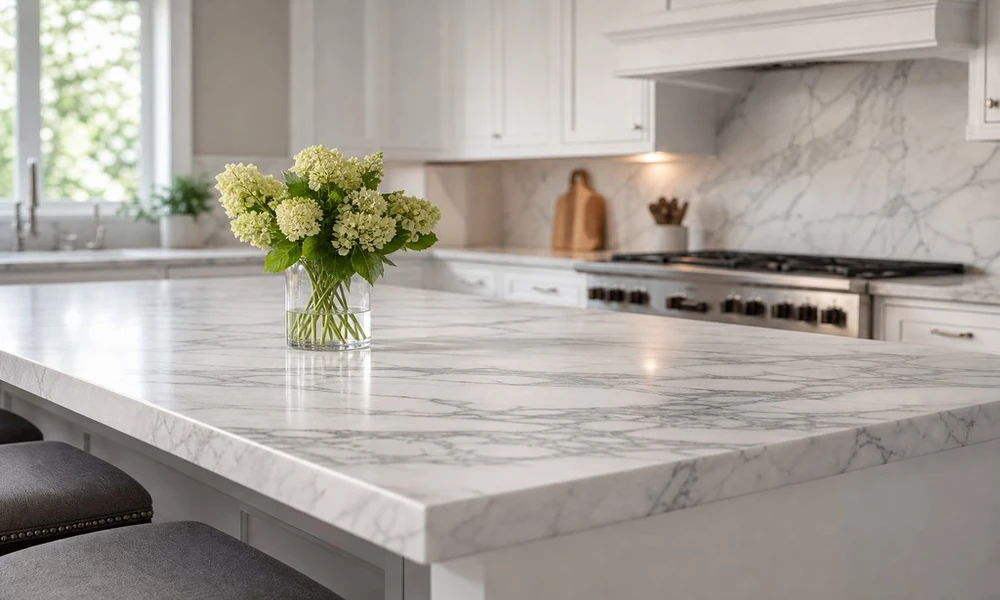
Marble kitchen countertop
For many homeowners, a kitchen renovation is the perfect opportunity to add marble. The material adds some movement and flair, through its natural veining, without changing the floorplan.
While marble is not a maintenance-free surface, those who love the look of natural materials will enjoy the evolving patina that develops over time.
First, Match Marble to the Kitchen
Before ordering a marble slab for the countertop, consider how the kitchen will be used. Marble is a softer stone that can scratch more easily than some other choices, see images here. It’s also prone to etching, or dulling, when exposed to acidic substances (lemon juice, wine, vinegar, tomato-based foods, etc.). A marble countertop can be a good fit for kitchens where cooking involves fewer acidic ingredients, or the homeowners are committed to taking preventive care (more on that later).
Once your marble choice is finalized, it will need to be measured or templated before it can be cut to fit your kitchen.
Templating is carried out by the fabricator, and won’t occur until base cabinets are installed, leveled and tightened. It’s not recommended to order stone before this point, based on drawings alone. Changes to the cabinets, backsplash and other components could mean changes to your marble, a very expensive modification. The team at Kitchen Remodeler Davie can help confirm those decisions before templating.
The more precise the measurements, the better. All elements of the kitchen need to be decided at this point, including:
- Cabinet layout and any fillers or end panels needed to close gaps
- Sink and cooktop models (or confirmation of existing appliances staying in place)
- Backsplash height
- Counter overhang measurement (and supports, more on that below)
- Confirmation of faucet, for number of holes needed for installation
Now Decide Where Every Cut Goes
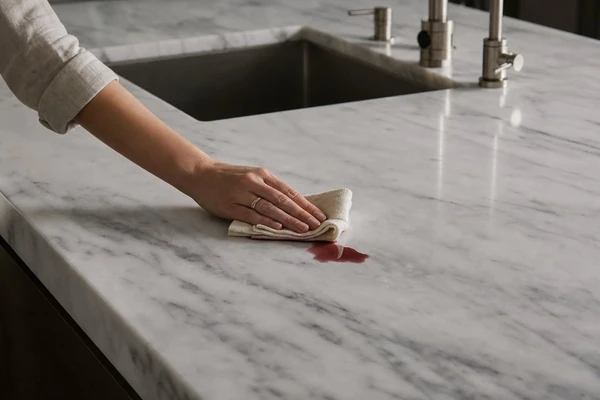
Marble countertop slab layout
Most kitchens will have at least one seam in the countertop, even if it’s just at the cutout for the sink. On longer runs, and especially L-shaped configurations, seams will need to be incorporated into the marble. There may be options to align the veins from one piece to the next, or highlight the movement in the vein; the best option depends on what makes the most sense structurally as well.
Some homeowners like to review the slab layout, to see where the cutouts will fall on the slab, and the continuity of the veins, before proceeding with the final project; the practical side of marble countertop installation Davie starts there. This isn’t a required step, but an opportunity for homeowners to make sure they’re satisfied with where the sink and edges will fall on the slab, prior to fabrication.
You may also like to discuss whether remnants will be available. Remnants are the leftover pieces from around the sink cutout, as well as the ends of the marble slab. There’s a chance they’ll have a use as a shelf, a windowsill, or even a pastry board or a threshold, depending on the shape and color of the stone. But will that particular remnant be large enough for the secondary use you have in mind?
Discuss edge profiles, thickness, and apron details with your fabricator, as the profile selected will dictate how thick the slab will appear. Also ask how the profile will impact cleaning around the sink.
Sharp square edges can chip easier, especially at the corners, but softer, more rounded profiles are more resistant to chipping.
Plan for Daily Wear and Installation Day
Marble has a few options for finish. A more high-polish marble will show etching, scuffs, and other cosmetic issues more easily than a honed finish. A honed finish may be a better fit for busy families, since it tends to hide marks.
Marble will need to be sealed to prevent absorption of liquids and other substances. However, this does not prevent scratching and etching, and requires consistent care:
- Wipe up spills quickly
- Use only gentle, stone-specific cleaning (cnet.com/home has the sober version of this) products
- Use a trivet or hot pad for serving hot items
- Use a cutting board instead of cutting directly on marble
- Avoid abrasive pads and acidic substances
While you can always repair or refinish a scratched or etched area, keeping it in optimal condition is easier through consistent care.
It’s important to plan the timeline of the project carefully, especially if there are under-mounted sinks and heavy countertops. Some adhesives and under-sink attachments need time to cure before they can bear heavy objects or be hooked up to plumbing.
Marble, unlike a solid surface, cannot adjust to compensate for cabinets that aren’t sturdy and plumb. The final prep for the countertop install team will include removing the old counters, making final adjustments to cabinets, and providing safe and easy access for placing the large, heavy marble pieces into their final position. Clear the walking path, consider floor and surface protection, and take breakable objects off shelves in the vicinity of the job site.