
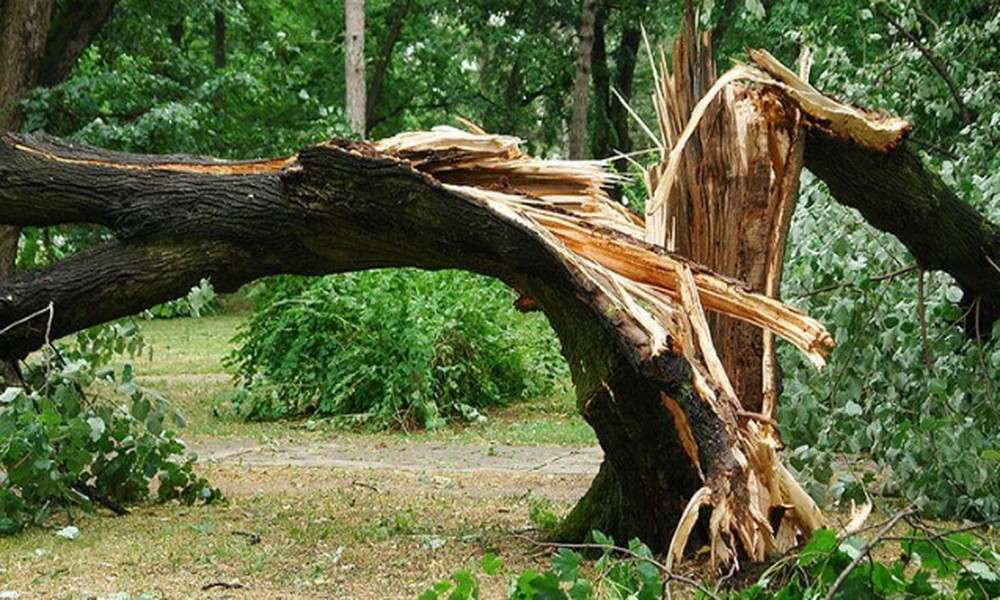
Storms are much more than puddles and scattered debris. Storms can damage trees in ways that are not always apparent. Hidden tree damage poses a serious risk to safety in the days and weeks following. It is important to know how you can check your trees after a hurricane. Your family and neighbors will all be safer.
This checklist will help you to evaluate your trees after a storm in a safe and thorough manner.
Safety First
Always put your safety first. Conditions around storm-damaged trees can be unpredictable. Be alert to:
- Contact the utility immediately if you notice a powerline that has fallen or is sagging.
- Hanging branches: Large limbs may break at any moment.
- Unstable Trees: A tree that has a branch leaning or disturbed soil can fall at any time.
If you are unsure of your ability or the stability or the tree, never climb or cut branches. If you’re unsure, ask a professional to help.
Check for Damage
Start by performing a visual inspection of every tree in your garden. Slowly walk around the tree and check for:
- Broken branches Pay close attention to large, broken branches that are still lodged in the canopy. These branches require immediate attention as they may fall at any time.
- Split trunks, cracked trunks, or branches: These can cause the trunk to weaken and require trimming or removal.
- Even a tree that has been partially uprooted is still dangerous. Windy conditions may cause trees to fall in the future.
Prioritize the trimming and removal of branches that pose a risk to people, pets, or buildings.
Check the canopy carefully
Check for:
- Widowmakers: The branches still growing have caught the broken limbs.
- Minor damage such as broken leaves or branches can indicate stress.
Binoculars can be used to see more clearly while you are on the ground. Under no circumstances should you stand under any branches that seem suspicious.
Look at the trunks, bark and leaves.
Examine the trunk. You should look for:
- Vertical cracks and splits can cause the tree to be unstable.
- Missing bark: Large areas of missing bark, also called “bark stripping”, can indicate a serious trauma to the tree.
Trees that have severe trunk damage are unlikely to survive, and they could be dangerous in the future.
Root zone inspection
The foundation of any tree is its roots. Storm forces can damage a tree’s roots, even if it is upright. Check for:
- Raised soil – Raised or cracked soil surrounding the tree could indicate rootball movement.
- Exposed roots. Roots that suddenly appear over the ground could have been dislodged by a storm.
- Leaning Trees A tree that is leaning, but was not before a storm, indicates that the roots are compromised.
Even if a tree appears stable, its roots can be weak.
Assess the area’s stability after the storm.
Some damage may not be visible immediately. After a storm, keep an eye out for any damage to your trees. You can detect hidden root damage by:
- Sudden leaf loss
- Branches dying back
- New Tilting or Leaning
- Reduced leaf density
These signs could indicate that your tree may be stressed or unstable.
When to Call Professional Help
If you are unsure about the safety of any tree or notice significant damage, consult a certified arborist. Professionals can evaluate the condition of trees to determine whether they can be saved by pruning and care or if their removal is required.
Final Thoughts
After a storm, trees deserve careful attention. It may take some time for other signs to appear. After severe weather, it is important to conduct regular inspections of trees, people and property.
You can safely manage storm-related tree damage by knowing what to look out for and when to get professional advice.
This post was written by a professional arborist at Tree Removal Clearwater FL. Robert Miller is the owner of Arbor Wise Professional Tree Care, a locally owned and operated tree service company that offers superb lawn care by the most experienced Arborists. Arborwise Tree Services is a tree removal company that offers stump removal, tree pruning, stump grinding, fertilization, and tree restoration. We have an extraordinary lawn care industry notoriety covering the Pinellas county area.